SMS channel

SMS shared inbox — texts with an owner

Text conversations in the same shared inbox as your email — assigned, noted, drafted by AI and sent by a human. Metered honestly, because texts cost real money.

Shipping soon
The short answer

inrelay’s SMS shared inbox brings text conversations into the same inbox as email: each text thread gets one owner, carries internal notes, and gets an AI draft a human approves before it sends. Because carriers charge for every message, SMS meters separately — never hidden inside the flat plan price.
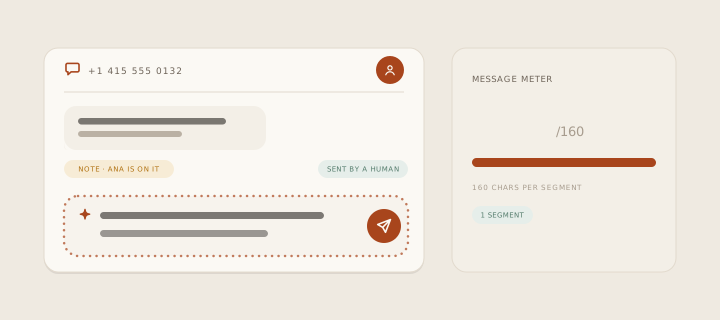
Looping animation: a text arrives and gets an owner and an internal note, the agent drafts a reply while a meter counts it against the 160-character segment, and a human presses send.

Texting is the channel customers answer fastest and teams run worst. In most small shops it’s a phone in a drawer, or worse, a founder’s personal number — no assignment, no history anyone else can see, no way to hand a thread over. An SMS shared inbox fixes the ownership problem: the number belongs to the business, and every text to it becomes a conversation your whole team can see, claim and finish.

SMS is in development. This page describes how the channel works and — because texting has real per-message costs most vendors quietly bury — exactly how we intend to charge for it.
01 · From the inbox

What you can do from the inbox

Texts behave like every other conversation in inrelay — short medium, same discipline.

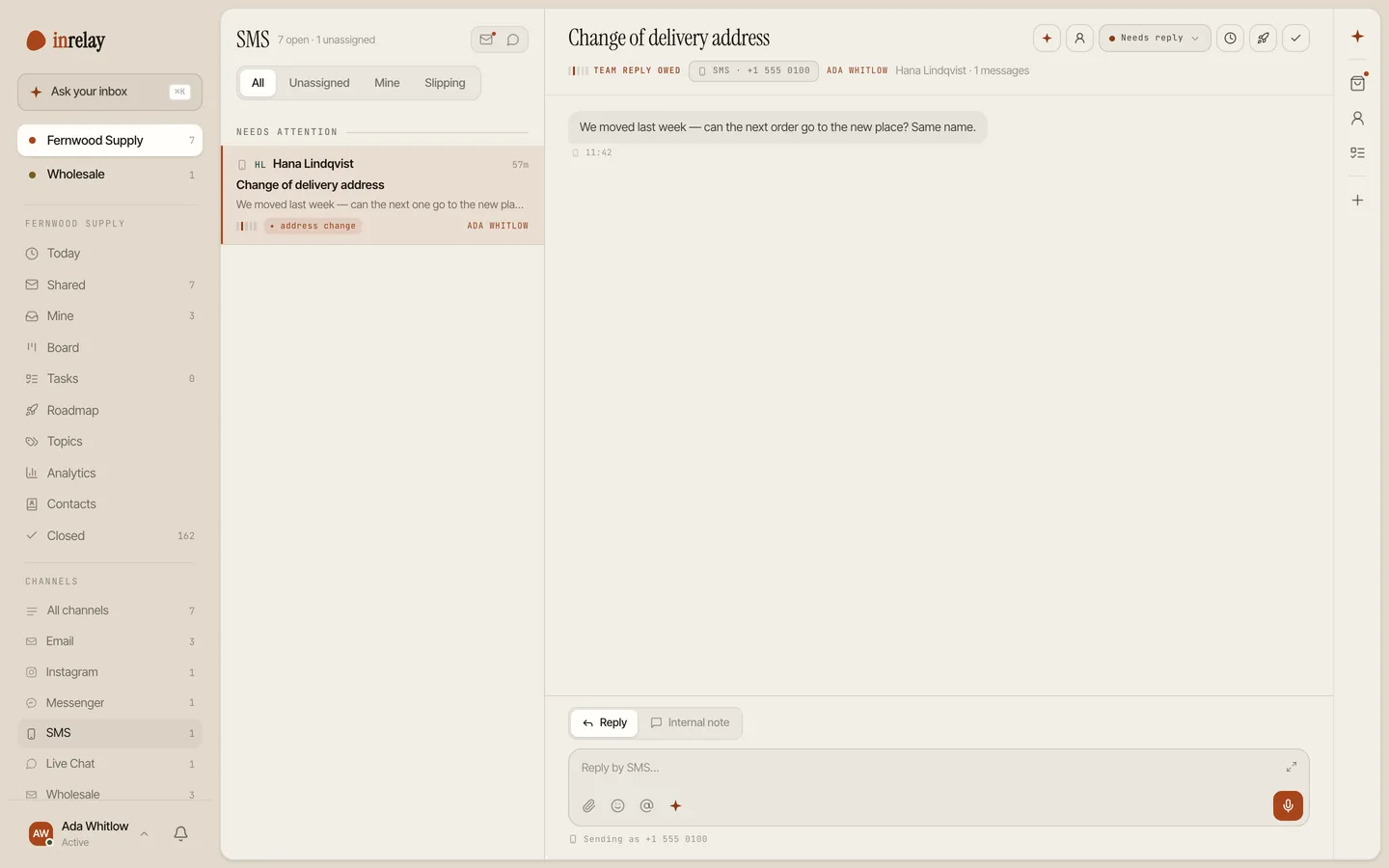
A text-message conversation in the shared inbox, alongside email and chat
  • Answer texts beside email, in one queue. A text is a conversation with a status and an owner, not a notification on somebody’s phone. Nothing lives outside the inbox.
  • One owner per number. The first reply claims the thread, so two teammates never text the same customer twice — the same collision detection that guards your email.
  • Keep the whole history in one thread. Every text to and from a number stays one continuous conversation — months of context, visible to whoever picks it up next.
  • Talk privately inside the thread. Internal notes and @mentions sit in the conversation and are structurally invisible to the customer — a note can never leave as a text.
  • Get drafts sized for a text. The AI copilot drafts in your voice at SMS length — a sentence or two, not a letter — and a human approves before anything sends. The approval gate applies to every channel, this one included.
  • Route texts like everything else. Triage tags intent and urgency on arrival, so a “where’s my order” text reaches the right teammate without a group chat about it.
  • Respect opt-outs automatically. When a customer texts a stop word, the thread is marked and outbound messages to that number are blocked until they opt back in.
02 · Setup

Setup & permissions

SMS has more setup than any other channel — not because of us, but because carriers regulate who may text at scale. Here’s the honest list.

Get a texting number

Provision a dedicated business number through inrelay, or bring one you already use. Either way the number belongs to the business, not to whoever’s phone it used to live on.

Register as a sender

Carriers in the US and several other countries require businesses to register before sending — who you are, what you’ll text about. Approval is measured in days, not minutes. We’ll walk you through it, but we won’t pretend the wait away.

Confirm consent

Texting laws require that people agreed to hear from you. You confirm your contacts opted in before outbound texting starts — and stop words are honored automatically from day one.

Go live

Texts start arriving in the shared inbox next to your email. The first teammate to reply owns the thread from there.

03 · The limits

Limits, stated plainly

SMS is the one channel where every single message costs the business real money. That fact shapes the pricing, and we’d rather show you the shape now than surprise you on an invoice.

SMS meters separately — always. Carriers charge a fee for every text message sent. So SMS gets its own small, usage-based meter, and it is never folded silently into the flat plan. A vendor who folds “unlimited SMS” into a flat plan is either losing money or planning to claw it back somewhere you can’t see. We won’t quote rates before the channel ships — carrier costs vary by country and change — but the model is pass-through and visible: you’ll see what texting costs, priced as texting, next to your plan on the pricing page.

Texts are billed in segments. Carriers count a standard text as roughly 160 characters; a longer message is carried — and charged — as several segments. The AI drafting short is a cost feature here, not just a style choice.

Registration is not optional. Unregistered business traffic increasingly gets filtered by carriers before it ever reaches a phone. The days-long registration step above is what keeps your deliverability honest.

SMS is a plain medium. No typing indicators, no read receipts, no rich formatting; picture-message support varies by country and carrier. What SMS gives you in exchange is reach — it works on every phone, with no app installed.

04 · The other channels

With your other channels.

SMS is one lane of the same inbox. Email and live chat ship today; the messaging channels — this one included — are in development, and we won’t claim otherwise.

Start today

Own the text thread.

Start free with email today — SMS lands in the same inbox when it ships. No card, never per seat.

Questions, answered.

How will SMS be priced?
On its own meter, separate from your flat plan — because carriers charge for every text, and pretending otherwise would just move the cost somewhere less honest. Rates get published when the channel ships; the model is usage-based pass-through you can see on the pricing page, not a bundle that breaks at volume.
Can I use my existing business number?
That’s the intent — moving a number between providers is standard practice across carriers, and we’ll document the exact routes we support at launch. What matters either way: the number ends up owned by the business and answered from the shared inbox, not trapped on one person’s phone.
How are opt-outs handled?
Automatically. A customer who texts a stop word is marked opted out, and outbound messages to that number are blocked until they opt back in. Consent isn’t a setting you can toggle off — texting laws require it, and the channel enforces it structurally.
When does this ship?
SMS is in development. We don’t announce dates we might have to walk back — the changelog is where launches are announced the day they’re real. If texting is the channel that decides things for your team, tell us and we’ll invite you to early access.

Start running your DMs.

Give your customers faster answers and your team their evenings back.

Desktop and mobile. Free for solo.